
News
Halloween fun food!
Check out these favorites:
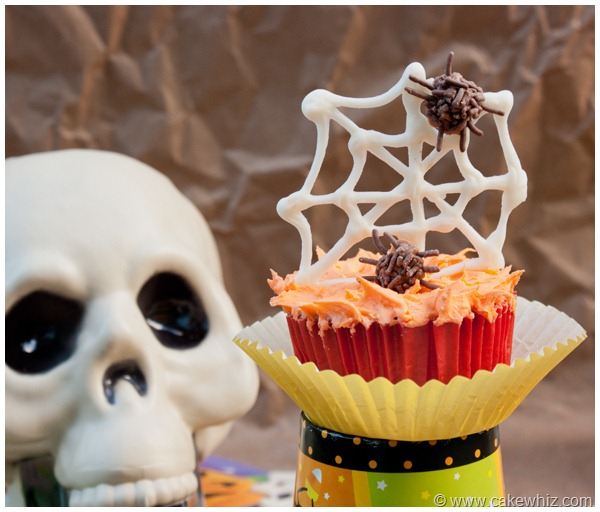
AMAZING Spider webs – Check it out at CAKE WHIZ!
______________________________________________________________________
This is so yummy – I just had to share. Check it out at A FOOD CENTRIC LIFE

Our favorite stories.
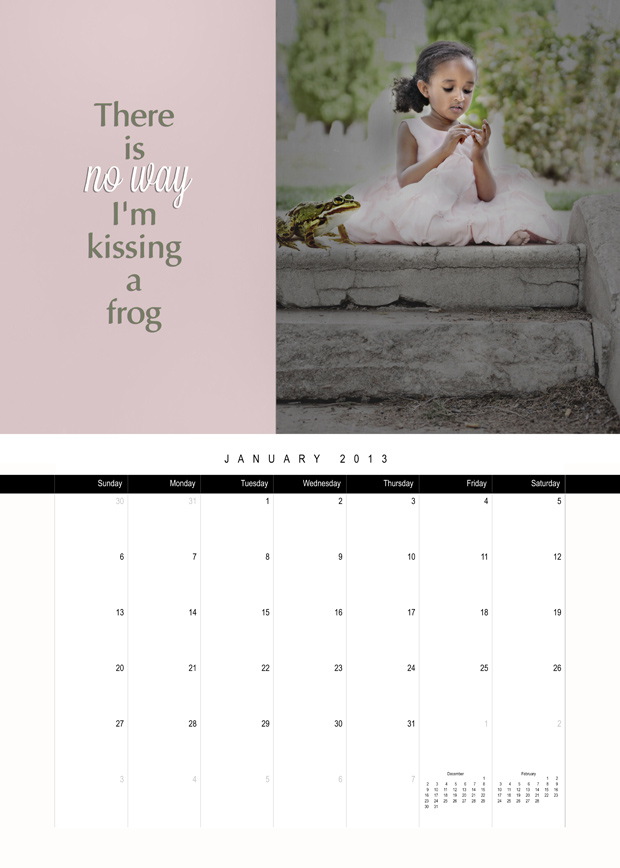
January 2013
About a year ago we decided that we would do a calendar project to benefit a children. We finally have our first calendar complete. It was our first year – and after all of the work and organizing put into it…. Jenny up and says… “so… are we doing this again next year?” Of course me… “I think so.”…. Jenny “Because if we are, I think I need to start on that NOW.”
Ok… enough said I think with that – it was obviously a huge project and took a ton of people, organizing, prop shopping and construction, photography time, editing time. But in the end – yes, my first thoughts is OF COURSE we will do it again for a 2014 calendar because it was just way too much fun not to.
We had great little subjects who participated.
Then of course we had a few very gracious vendors that supported some of our shoots too.
Anything But Vanilla was amazing with some cupcakes in the “Everything nice” shoot. She makes some of the most amazing flavors of cakes & cupcakes I’ve ever tasted.
Cake Pandemic – Christine Godsey Black 720-235-2008 made us a BUNCH of pies for the Little Jack Horner shoots. They were so yummy, and looked beautiful… that is before the boys dug in and destroyed them upon command!lol
Kimber at Kim’s Designs is my go to tutu vendor. Amazingly creative and custom makes tutus for our shoots. I can’t say enough about her work.
Dizzie Izzie makes amazing pedi-skirts and much more. The kids just love twirling in them!!!
And then my thought catcher & arranger and set designer too: Jenny Bonfiglio
THE STORIES.
PRINCESS & THE FROG
SUGAR & SPICE AND EVERYTHING NICE
LITTLE MISS MUFFET
BED IN SUMMER by Robert Louis Stevenson
RAPUNZEL
LITTLE BOY BLUE
LITTLE RED RIDING HOOD
JACK AND JILL
WYNKEN BLYNKEN & NOD
LITTLE JACK HORNER
For each copy of the 2013 Calendar sold between October 20th, 2012 – February 1st, 2013 a portion of the proceeds will be donated to St. Jude Children’s Research Hospital.
PURCHASE YOUR 2013 STORYBOOK CALENDAR BY CLICKING HERE!

PHOTOS in the love of food.

Muy Bueno Cookbook – available now at Barnes & Noble bookstores and online at Amazon.com
Food photography is an amazing thing that draws the viewers and makes them say yum… or not. Do any of you have one or more cookbooks sitting on your shelf? Now how many recipes have you actually made that DIDN’T have a corresponding photo?
It’s the law of averages – the more photos that tell the viewer that it looks good to eat – the more likely they will come back to look at your blog, the more likely they will post it on their social media pages, and the more images they see they like in a cookbook… the more likely they will buy it. There are a lot of wonderful chiefs out there, but some of us are just average mom, spouses, or even bachelor(ettes) that really just want to be able to cook a recipe without too much effort and make it look good. Being able to compare what you have prepared from a recipe to a photo in a book can be the pat on the back you need to know you did it right.
I’ve been photographing small products and food for over two decades and how can I help but love it when someone looks at a food photo and you can see them with a slight hunger twinge in their tummy for it.
That being said… it’s time to spruce up your blogs and websites. Why not push your food blog to the next level – and make it look as good as it tastes? Let me help you with your food blogs or cookbooks to be and make people drool. For details please contact me at info@fototails.com for a brochure and options for making your blog pop!
Press
The FEED Zone
CRAVE Denver
MUY BUENO Cookbook


ONLINE MAGAZINE / E-BOOK


RECIPE DEVELOPMENT
Recipes that feature products from IMUSA and Avocados from Mexico
GUEST POSTS
- Churros & Mexican Chocolate Sauce Recipe, Dear Crissy (02/14/12)
- Chipotle Shredded Pork Enchiladas – Family Recipe from Muy Bueno Cooking, White on Rice Couple (05/05/11)
- Authentic Mexican Recipe: Enchiladas Verdes, The Kitchn (09/13/10)
CONTRIBUTOR
- Gojee Drinks
- Honest Cooking Contributor Yvette and Veronica
- Day of the Dead: Honoring our grandmother, Jesusita, MexConnect (10/02/10)
- A Mexican menu for Cinco de Mayo, MexConnect (05/04/11)
- Meet TSM’s Newest Contributor, Muy Bueno Cookbook, The Stanton Magazine (11/01/10)
- Hispanic Kitchen
- GourmetSleuth a part of (the nest) network
- Allrecipes
- Food52
- Foodista
- Muy Bueno Valentine’s Day Menu {Recipe Cards}, SpanglishBaby (02/11/11)
- Cultures Intertwined: Halloween VS Dia de los Muertos, SpanglishBaby (10/25/10)
- Muy Bueno: Cooking for our Men, SpanglishBaby (09/17/10)
ONLINE
- The Ultimate Latina Toolkit, Latina
- New Cinco de Mayo Recipes!, Paul Deen
- Web Deliciousness: Cinco de Mayo, The Pioneer Woman (05/05/11)
- Links We Love, SAVEUR (11/21/11)
- Weekly Roundup: Creative Cocktails, Gourmet Live (12/31/10)
- Spiked Coffees to Cure Your Hangover, Yummly (09/02,11)
- Warm Drinks to Keep You Toasty All Winter, Yummly (12/02,11)
- 10 Fantastic Fall Squash Recipes, Babble (11/14/11)
- Freshly Pressed, WordPress (11/10) and (07/11)
- Great Food From Asia, Europe & Latin America: 36 Recipes, The Kitchn (07/10)
- Festive New Year’s Cocktail: Cranberry Margarita, The Kitchn (07/10)
- Looking for a Great Refried Beans Recipe: Good Questions The Kitchn
- Spiced Pumpkin Mousse & Chai Tea Concentrate: Delicious links for 11.08.2011, The Kitchn
- Thanksgiving Turkey Leftovers, Latino Style, NBC Latino (11/28/11)
- A Latino Thanksgiving: Galletas de Suero (Buttermilk Biscuits), Fox New Latino (11/20/10)
- 8 Great Recipes for National Margarita Day, Fox New Latino
- Celebrating Los Dias de los Muertos (photography), Fox New Latino (10/30/10)
- Celebrating Thanksgiving, Latino-style, Fox New Latino (11/18/11)
- Latina Food Bloggers’ Favorite Recipes, Cookbooks and Holiday Meals, SpanglishBaby (12/27/11)
- Latin Slow-Cooker Recipes. Que Gusto!, Tiki Tiki (01/27/11)
- The Gift of Making Tamales Together, Tiki Tiki (12/16/10)
- Home Altars and La Caridad, Tiki Tiki (09/08/11)
- Empanadas: The Global Fried Pie, Tiki Tiki (11/09/11)
- Black Bean Salad: A Simple and Healthy Recipe, New Latina (01/20/11)
- The New Latina Guide E-Book: Download Your Free Copy!!, New Latina (02/15/11)
- Latina Cooking Blogs – A Mix of Tradition and Technology, New Latina (03/01/11)
- La Cuaresma ha Llegado! / Lent is Here!, Mama Latina Tips (03/11/11)
- Chiles Rellenos de Camarones y Queso / Cheese and Shrimp Stuffed Poblanos, Mama Latina Tips(04/01/11)
- Happy Easter!, Mama Latina Tips (04/22/11)
- Muy Bueno Cookbook Featured in Latina Magazine
- Día de los Muertos and Halloween (photography), La Voz 10/26/10
- Champurrado: A Solution To The Snowstorm, Huntington-Belle Haven (01/27/11)
- Texture Matters, Fine Cooking (03/01/11)
- Recipes from Our Favorite Latina Food Bloggers, iVillage (09/12/11)
- Thanksgiving Dishes Latinas Love!, iVillage (11/21/11)
- 5 Twists on Christmas Eve Fish, The Stir (12/23/11)
- 15 Sweet & Salty New Year’s Appetizers Make Your Mouth Say PARTY!, The Stir (12/30/11)
- Host a Traditional Posada This Christmas, MAMIVERSE (12/15/11)
- Cinco de Mayo Sweets & Drinks, Sugar Loco (05/03/11)
- Latin Flair – Papaya and Coconut Popsicles (Paletas de Papaya y Coco), A Chica Bakes (06/30/11)
- Recipes for Lent/Recetas de Cuaresma #4, Thoughts of a Mommy (03/30/11)
- Spicy Mushroom Torta with Wisconsin Queso Quesadilla Cheese, Wisconsin Cheese Talk(04/01/11)
- Ten Delicious Global Dishes That You Can Make At Home, The Huffington Post (04/04/11)
- Nine Great Easter Treats And Recipes From Around The Globe, The Huffington Post (04/22/11)
- Top Ten Holiday Drinks, Popular Hispanics
- Delicious Empanada Recipes from Muy Bueno Cookbook!, Popular Hispanics
- Thursday’s Daily Dish, 12 Tomatoes (10/28/10)
- Blogs by Latinas
- IMUSA
GALLERIES
- Baking is Hot
- DessertStalking
- dishfolio
- foodgawker
- Liqurious
- Make and Takes
- Photograzing
- Refrigerator Soup
- Tasteologie
- TasteSpotting
- Vita
- Blue River Bistro
- 1515 Restaurant
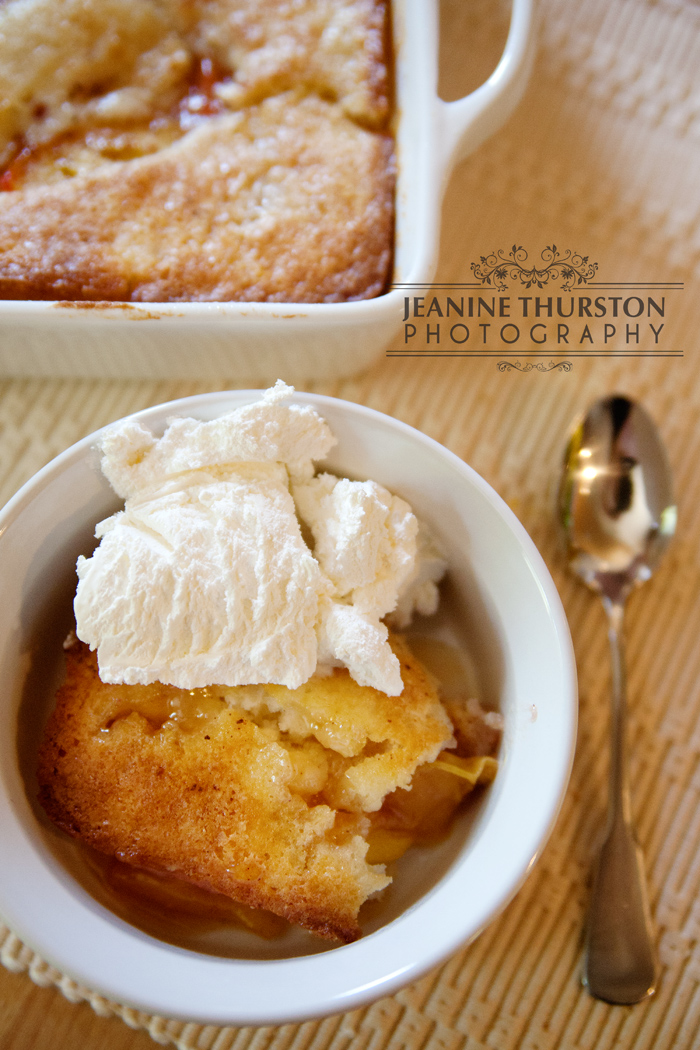
I almost missed the “Peach” month. What was I thinking?

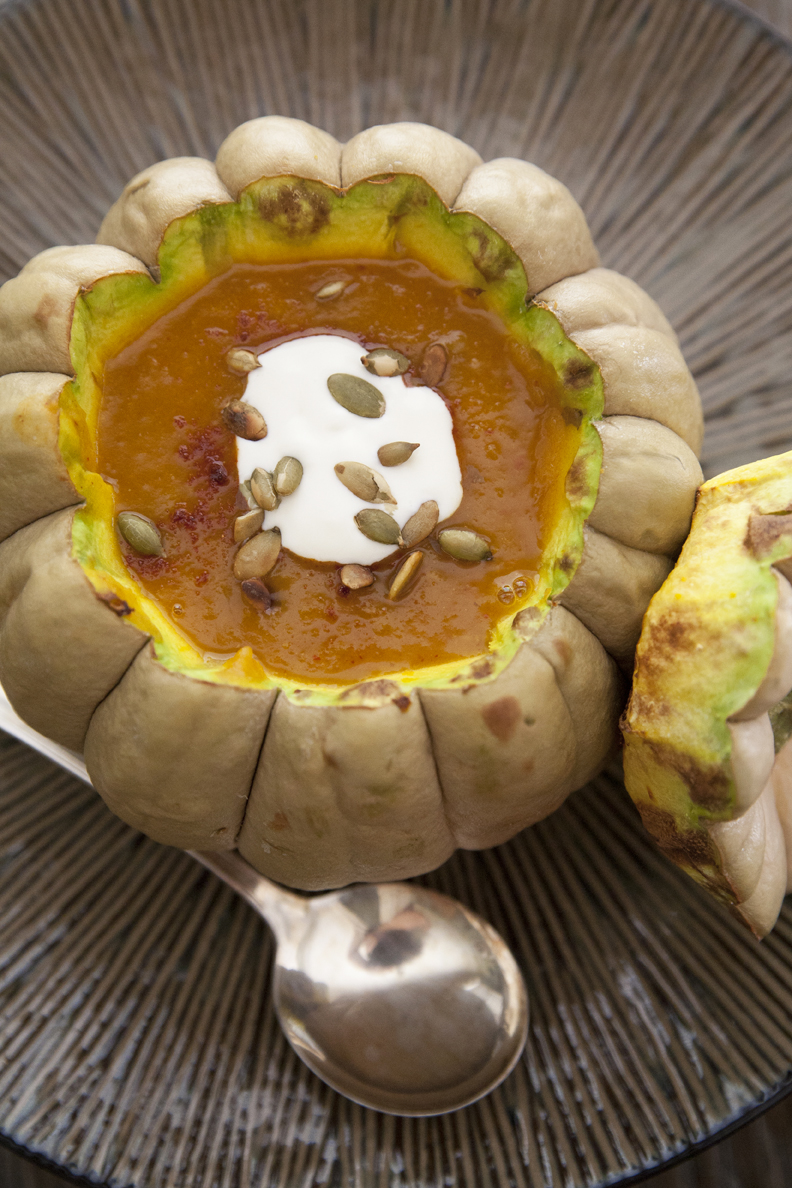
So most of August peaches escaped my radar. Of course, I am a photographer – mom – wife… first. But WHAT WAS I THINKING? This is one of my favorite fruits and in a month when we are suppose to be celebrating the mighty “Peach” it almost slipped by me. THANK GOODNESS, I caught a post on facebook letting me know it was national peach month. So, this morning I decided I needed to make some fresh peach cobbler! So here you go:
- FRESH PEACH COBBLER
- 1/2 cup salted butter
- 1 cup all-purpose flour
- 1 1/2 cups sugar (divide into 3/4 cup each)
- 1 tbs. baking powder
- 1 tsp salt
- 1 cup milk
- 4 Large fresh yellow peaches (or 5 if you’re like me and LOVE peaches)
- 2 tbs. fresh squeezed lemon juice
- 1/2 tsp lemon zest
- 1/2 tsp cinnamon
- nutmeg
Pre-heat your oven to 375 degrees.
Melt butter in an 8×8 baking pan.
Combine flower, 3/4 cup sugar, baking powder and salt in a medium bowl. Add one cup of milk and mix until dry ingredients are moist. Don’t stir – pour batter over the melted butter.
Heat remaining sugar, fresh peaches, lemon juice, lemon zest, and cinnamon on medium heat until sugar has dissolved. Pour peach mixture over batter AND DON’T MIX. THE CRUST WILL FORM OVER THE PEACHES WHEN BAKING. I sprinkle the nutmeg over the top before putting into the oven!
Bake the cobbler for about 40-45 minutes. Serve with either vanilla ice-cream or for a lighter version use frozen whipped cream.
Hope you enjoy!!! It doesn’t last long –


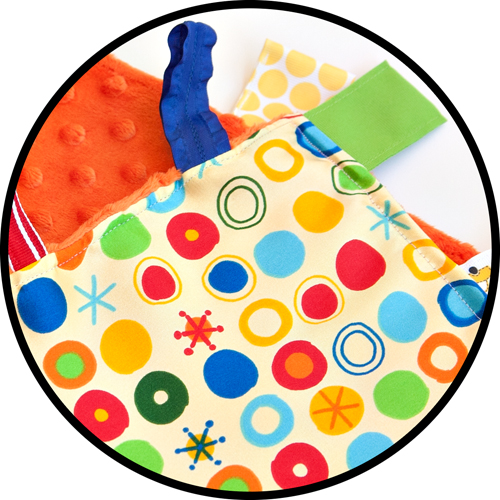
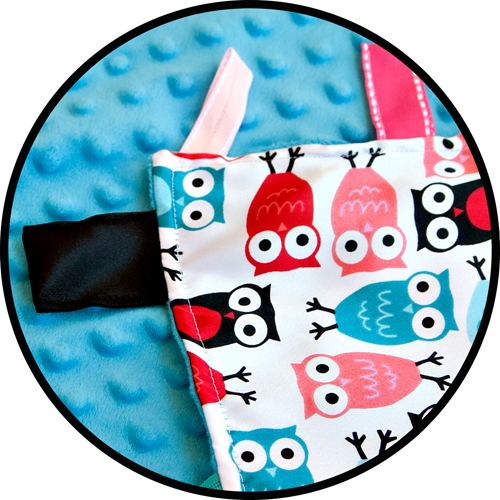
BABY Jack tab blankets
 SUPER happy to say that I’m now carrying Baby Jack tab blankets at our new studio in Denver. Both my kids LOVED their tab blankets – in fact they wore them completely out because they carried them everywhere. They are super soft and have the great sensory tabs and nice and small so your kids can tote them around without taking up much room at all. If you are interested, we will have some available at the studio or if you see one of the designs here that you like, call me and I can let you know if I have it in stock and can also take orders over the phone or online. Any questions: (720)566-9770 or e-mail us at info@fototails.com
Description
baby Jack blankets are all handmade ribbon tab blankets. They are baby/child size.Each blanket has 1 looped ribbon attached for clipping toys or a pacifer and the rest of the ribbons are sewn shut to create “tabs”. This is to prevent from easily popping off after normal wear & tear and to prevent safety issues like getting little fingers caught.
They are PERFECT perfect baby shower gifts!
They are PERFECT perfect baby shower gifts!
General Information
Please wash on cold delicate & tumble dry solo to prevent from shrinking. Ribbons may fray and stray after normal wear and tear so please moniter children carefully!
$23.00 + tax (& shipping)



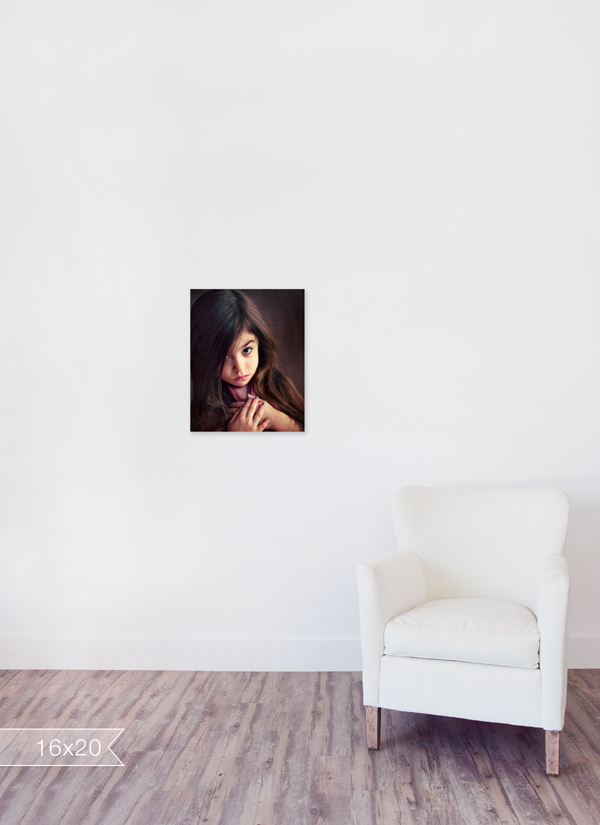
Your Portraits as Fine Art





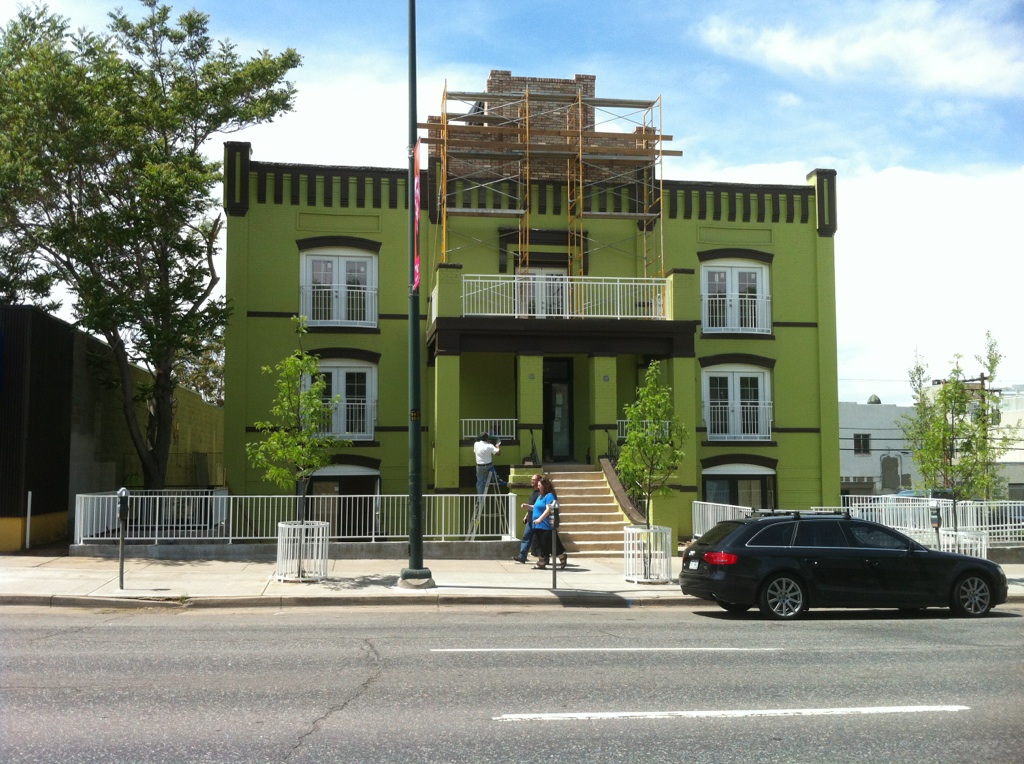
The sneak peek.
So, cell phone in hand here is the sneak peek of our new studio space. Obviously there will be quite the transformation after construction is complete… but, we are so excited to have all our clients and friends come visit when we get all moved in!

Photograph by: Jeanine Thurston

Photograph by: Carl Simpson

Photograph by: Carl Simpson
The prelude….
The word is out – we are moving out of the “NEST” – a studio space we’ve been in for the past three years. But, don’t be sad…. we are still going to be in Denver in an even more amazing space. I’ll post images very soon – it’s old turning new with a beautifully renewed old building in Denver and I’ll be swinging by later today to get a few “construction” photos. I’m jumping out of my skin – as we go to sign on our new space later today! 🙂 Couldn’t be more excited. Subscribe to our feed here to be up to date on all the progress and I can feel an opening party and some super specials as soon as we move in.
A Storybook Journey.
In 2012 we are taking ourselves on a storybook journey towards our final destination of a 2013 calendar to raise funds to donate to St. Jude.
The goal is to take a child’s point of view when we photograph children in some of their favorite childhood stories. We’ve managed a few of the shoots so far and still have a huge path ahead of us to capture the final images for the 2013 calendar that will be released for sale sometime in October of 2012.
While we are dreaming and and creating sets or scouting locations for many of the schedule shoots – the ultimate goal is that we want to keep them child-like and so set designs are created either by children or with a child’s point of view in mind. If you follow us on our Facebook page at Jeanine Thurston Photography, you will be able to keep up-to-date on upcoming shoots that you children may be interested in participating in with us.
This is a very exciting project and so far we have been having so much fun with our little subjects. Some of the comments I’ve received from parents that have had their children participate already is about how the children continued to role-play all the way home, and things like “my kids have been talking about the shoot for weeks after!” We are going about the sessions with the mindset of “NO CHEESE PHOTOS” and lightly leading the kids into creating their own little “storybook” playtime during the shoots. It really has amazed me at the expressions and real fun everyone has during the process.
If you have children between the ages of 3-12 years of age and feel you may be interested, please like our page at Jeanine Thurston Photography and check back often for updates over the next few months. We have some amazing shoots planned and would love to have you come to one of the photo-shoots with your children! We limit the number of kids that can participate in each shoot so we can concentrate on getting some great calendar images… so as soon as you see a notice post – please contact us ASAP to get your spot.

Wynken, Blynken & Nod
Portraiture:From earliest times the portrait has been considered a means to immortality.

From earliest times the portrait has been considered a means to immortality.
American Heritage Dictionary:
por·trai·ture |
(pôr’trĭ-chʊr’, pōr’-) 
n.
- The art or practice of making portraits.
- A portrait.
- Portraits considered as a group.
Oxford Companion to the Photograph:
portraiture |
As the very earliest daguerreotypes required an exposure time of about eight to ten minutes, and no living person could possibly keep still for so long, there were at first no portraits. (In March 1839, however, L. J. M. Daguerre had shown Samuel Morse a view of the Boulevard du Temple in Paris that included a man having his boots polished—probably the first human being to be recorded, albeit inadvertently, on a photograph.) But exposure times soon became shorter, and as many as 95 per cent of all surviving daguerreotypes seem to have been portraits.
Curiously, many daguerreotypes were reversed ‘mirror’ images, because the process made direct positives, requiring no negatives. Soon, however, daguerreotypists learned techniques for correcting this reversal. When, for instance, Alexander Wolcott opened the first photographic portrait studio in the USA—in New York in 1840—he photographed his sitters reflected in a mirror.
The first professional portrait studios in Britain opened in the early summer of 1841. Richard Beard (1801-85), a coal merchant, built a ‘glasshouse’ on top of the Royal Polytechnic Institution in central London. He soon adopted all the devices that were to become familiar in 19th-century studio portraits: painted backcloths, rich draperies, pedestals, bookcases, heavy armchairs, and footstools, all conjuring up an atmosphere of money and possessions. (But the hundreds of itinerant daguerreotypists who plied their trade in Europe and North America in the decade or so after 1839 made do with more primitive settings.) Among the most consistently fine daguerreotype portraits were those taken by two Americans, Southworth and Hawes, who, in their Boston studio, turned the rigidity of the medium to their advantage, tightly controlling their light sources, the placement of furniture and accessories, and the artfully contrived, iconic poses of their sitters. Though photographers frequently asserted that they could make portraits to rival those made by painters, it was the Southworth and Hawes daguerreotypes which first began to live up to the claim. However, as the example of Cromer‘s Amateur—an anonymous Frenchman—suggests, many other outstanding daguerreotype portraitists will probably never be identified.
Meanwhile, Henry Talbot had recognized the suitability of his negative-positive process for portraiture almost as soon as he made his first ‘photograph from nature’ in 1835, but did not succeed in making a photographic portrait until October 1840. In the event, his calotypes were never as popular for portraits as daguerreotypes, especially in the USA. Although not reversed, they were on fairly coarse-grained paper and could not show as much detail as Daguerre’s fine-grained process. Nevertheless, outstanding results were sometimes achieved, for example in Scotland by Robert Adamson and the painter David Octavius Hill between 1843 and Adamson’s death in 1848. In 1843, Hill witnessed the foundation of the Free Church of Scotland in a ceremony in Edinburgh attended by over 500 church ministers and others. Determining to paint a picture commemorating the event, he joined Adamson in setting up a studio on a hill overlooking the city. The resulting studies for the painting (which took Hill twenty years to complete) owe much to the traditions of Scottish academic painting. They concentrate on the face rather than extraneous detail or background, and demonstrate a rigorous control of daylight (all were taken in the open air) as well as a flair for theatrical posing. With the unrivalled control of the chemical process by Adamson, these are the most accomplished calotype portraits to survive.
If early Victorian portrait photographers soon learned to show their subjects the right way round, their results were still not very lifelike. The slowness of the processes available to them meant that their subjects had to remain motionless for up to a minute at a time. Often, a sitter’s head was held still by a neck clamp; sometimes there was another at the waist. Like a victim of a firing squad, she or he grasps the arms of a chair or other piece of furniture tightly, and stares grimly at an intimidatingly large camera and brass-barrelled lens, while the photographer disappears under a dark cloth to adjust the focus. No wonder the men, women, and children portrayed usually look so miserable, and that we think of the Victorians as strait-laced and humourless.
In the 1850s, both calotypes and daguerreotypes were superseded by Frederick Scott Archer‘s wet-plate process. This changed the practice of photography everywhere, and opened the field of portraiture to amateurs who—because they had unlimited time, often knew their sitters well enough to make them relax, and were not concerned with profit—often outdid professionals in the artistry of their results. A prime example was Charles Lutwidge Dodgson (Lewis Carroll), who started taking portraits at Oxford University in 1853. Although his early efforts showed little originality or skill, he soon learned to make his sitters look more relaxed and natural than most of his contemporaries, despite the fact that his shortest exposure time seems to have been 40 seconds. Like Hill and Adamson, Dodgson concentrated on the face, and took great care in placing his sitters’ hands. Over a quarter of a century, he took hundreds of the most revealing portraits, particularly of the children—mostly girls—who were his favourite subjects.
An even more remarkable amateur was Julia Margaret Cameron, who took up photography aged 48. Closely connected with the artistic and cultural world of the 1860s and 1870s, she photographed the most famous writers, artists, and scientists of the time, bringing her large-format camera close to their heads and shoulders. Using dramatic side lighting, and eliminating extraneous detail (often even covering her sitters’ clothes in dark velvet), Cameron’s depictions of heads at almost life size are the earliest examples of what we now call ‘close-ups’. Her pioneering discovery of the power of indirect, dramatic lighting perhaps derived from the fact that her first studio may have been a greenhouse in her garden on the Isle of Wight, where direct sunlight would have made the wet-collodion process extremely difficult to control. Forced to cover most of the windows to reduce the light, she soon saw the dramatic results of illuminating her sitters from one direction only. An interest in the fashionable ‘science’ of phrenology, which purported to read character and intellect from the shape of a person’s skull, may also have encouraged her use of raking side light to highlight every bump. The combination of Cameron’s large-format camera, reduced lighting, and extreme close-up dictated exposure times of minutes rather than seconds. But the resultant slight movement, together with a frequent lack of focus and imperfections in her developing and printing technique, give her portraits a life and immediacy which has never quite been surpassed.
In France, meanwhile, one professional portraitist achieved something of Cameron’s close-up impact. The head-and-shoulder portraits of Nadar use light almost as dramatically as hers. In due course, he adopted electric lighting, which he could control more precisely than daylight, and his portraits are smoother and more technically proficient than Cameron’s. However, they often lack the immediacy and dramatic impact of hers.
The carte de visite format, patented by André Disdéri in 1854, dramatically cut the cost of portraits and led to a surge in their popularity, especially when Disdéri sold thousands of his pictures of Napoleon III in 1859. The carte de visite was imported to Britain by a French company, Marion & Co., and its most fashionable London practitioner was also a Frenchman, Camille Silvy, who wore elegant clothes and white gloves in the expensively equipped studios he opened in 1859. The pictures he took there certainly stand out from the mass of tiny, flatly lit, stereotyped carte portraits which filled Victorian photograph albums for the next two decades. In England, too, the popularity of the royal family and the desire to collect photographs of them led to commercial success.
In the USA, meanwhile, Napoleon Sarony photographed thousands of actors and celebrities in his New York studio (including Oscar Wilde, on his famous 1882 tour). Like Silvy, Sarony dressed the part. He wore a red fez in the studio, and signed his portraits with a red flourish, an idea surely borrowed from Nadar. Though it is true that, at the turn of the 20th century, it was in the USA that photographers became more and more enamoured of the snapshot, partly because of Eastman Kodak’s non-stop production of cheap roll-film cameras, it was also here that professionals began to assert artistic control over the medium. (But key figures like Emil Hoppé in England and Rudolph Dührkoop and Hugo Erfurth in Germany did so too.) An example of the trend was Gertrude Käsebier, who opened a studio on Fifth Avenue, New York, in 1897. She soon became one of America’s leading portraitists, bringing a new naturalness and life to what was often formulaic and stereotyped. Like many of her contemporaries, she mastered the rather painterly printing processes of the time, making gum bichromate and platinum prints of her pictures. Another influential portraitist, Alvin Langdon Coburn, who worked in Käsebier’s studio 1902-3, did the same. He was an early member of the Photo-Secession, which brought pictorialism to its peak, and whose portraits shrouded their subjects in a romantic out-of-focus haze, giving them the texture and feel of paintings rather than photographs. The pictorialists used soft-focus lenses, developed new printing techniques, and manipulated negatives and prints with brushes, pencils, and scalpels. Though their control of these effects, and their skill at composition, was remarkable, they often seemed to be showing off, reducing their subjects to mere design elements.
Among the photographers who stood out from this crowd were Edward Steichen and Baron Adolphe de Meyer. Steichen had followed in Sarony’s footsteps, photographing celebrities, socialites, and artists (in Paris, he made famous studies of Rodin and his work), and remained active as a portraitist until 1938. De Meyer was a master of pictorialist wizardry, and manipulated light to swathe the glamorous celebrities who visited his studio in what his disciple Cecil Beaton called an ‘aurora borealis’. As a final guarantee of idealized beauty, he employed skilful retouchers to remove any perceived imperfections of face and figure.
Beaton, who took up photography in England in the 1920s, decided that to prosper in this field it was essential to create a glamorous character for himself, as Nadar, Sarony, and de Meyer had done before him. Having succeeded at home, he crossed the Atlantic to work for Vogue, Harper‘s, and Vanity Fair, and went on to Hollywood, where sleek and glossy glamour portraiture reached its height in the work of such men as Ernest Bachrach, Robert Coburn, and Eugene Richee. Returning to Britain just before the Second World War, Beaton took the first of a long series of royal portraits: romantic images of Queen Elizabeth that made her a fashionable icon. No other royal photographer, before or since, so effectively rivalled the flattering court painters of previous centuries.
In the meantime, both in the USA and Europe, a very different, documentary approach to the depiction of people had been developing since the late 19th century. In New York Jacob Riis captured the misery and deprivation of slum dwellers, and both he and Lewis Hine, who photographed immigrant workers and children in appalling factory conditions, used their cameras as tools of propaganda. Later, Paul Strand and Walker Evans, artists more than propagandists, photographed people they encountered in the street or on farms, giving them a dignified nobility. In Germany, August Sander took straightforward pictures of people from every background and walk of life for his monumental People of the Twentieth Century project. In Britain, a less accomplished photographer, Sir Benjamin Stone, had similar ambitions. Sander in particular has continued to influence photographers until the present day, and the attempt to make ‘objective’ formal portraits of people who are asked not to alter their demeanour for the camera (an impossible task) is very much in fashion at the beginning of the 21st century. (Significantly, not only Evans and Sander but contemporaries like Boris Mikhailov, Fazal Sheikh, and Rineke Dijkstra, who depict their subjects with often painful candour, were prominently represented in the huge Cruel and Tender exhibition of documentary-realist photography held in London and Cologne in 2003.).
Well before 1914, gifted amateurs like Jacques-Henri Lartigue had made ‘candid’ portraits, sometimes of people in violent motion. Paul Martin used a disguised camera to snap excursionists and courting couples. After the First World War, cameras like the Ermanox and the 35 mm Leica made this kind of photography much easier. In Paris, André Kertész and Brassaï often photographed people unawares. Despite the spontaneous nature of these street pictures, the photographers developed an extraordinary ability to produce well-composed and penetrating images which seemed to capture an emotional reality about their subjects (who, as people on the move, could no longer be called sitters). The split-second instant when the disparate elements of a candid photograph lock together to convey meaning came to be called the ‘decisive moment’, a concept later defined by Kertész’s and Brassaï’s French contemporary, Henri Cartier-Bresson.
One partial consequence of the development of the 35 mm camera was the proliferation of photographic news magazines, which flourished in the Weimar Republic and reached Britain in the shape of Picture Post and the USA with Life. They used photographic portraits in considerable numbers. The photojournalists who took them are too numerous to list here, but increasing editorial use of portraits—in newspapers as well as magazines—meant that eminent people became more familiar to the public than ever before, and often in less formal contexts and attire. Some of these photojournalists, and other 20th-century photographers, kept alive the icon-making ambitions of Julia Margaret Cameron, especially in North America. The American Arnold Newman and the Canadian Yousuf Karsh learned their trade as assistants to commercial portraitists in cities with moneyed clients—Newman in Philadelphia and Karsh in Boston. Starting their own studios, they specialized in heroic portraits of politicians, scientists, artists, and other successful people. Newman often included the tools of his subjects’ trade to make ‘environmental portraits’; Karsh’s dramatically lit concentration on the face and exclusion of unnecessary detail more closely emulated Cameron’s style.
One theme in the history of 20th-century portraiture, however, is the retreat from the Victorian cult of heroes and their historical role, and from the ‘proper’ (dressed-up, dignified) photographic pose. By the 1920s, swimwear, cigarettes, and informal or risqué poses were becoming common. (Ever the pioneer, Lartigue had captured friends and relations hurtling down steps or falling off go-karts or into ponds, and in 1920 his wife Bibi sitting on a lavatory.) Newman, too, with his careful pre-planning and skilled lighting, took a handful of overtly non-heroic portraits. His studies of the German arms manufacturer Krupp and the British politician Enoch Powell make both look like the villains he obviously thought them to be. Newman’s younger countryman Richard Avedon often placed his subjects head on in front of a plain light background and waited, silently, for them to strike a pose—which he then captured with a sudden flash. The edgy, uncomfortable, disorientated people who stare out from his photographs are anything but heroic, not just because of his harsh and uncompromising lighting, but because his silence was the opposite of the relaxing conversation with which portraitists often put sitters at ease. One powerful set of Avedon portraits documents the last four years of his own father’s struggle with cancer. In some ways just as disturbing are the portraits of handicapped people and social misfits taken by Diane Arbus. Contemporary photographers such as Nobuyoshi Araki, Seiichi Furuya (b. 1950), Nan Goldin, and Sally Mann have variously captured their subjects—often friends, lovers, or family members—naked, angry, sick, or dying.
Another, contrasting kind of successor to photographers like Newman is perhaps Annie Leibovitz, who began her career photographing rock stars for Rolling Stone magazine, then Vanity Fair. Her portraits are witty, imaginative, and frequently very elaborate, if seldom intimate. One complex collage by the artist David Hockney reveals how, for her portrait of him, Leibowitz arrived with an assemblage of people and equipment worthy of a Hollywood production. Such effects are difficult to achieve, and call for supreme self-confidence in the photographer. One cannot take images of great people unless one has a strong character oneself. Throughout the medium’s history, the finest portraits of powerful subjects have been taken by powerful photographers.
By the end of the 20th century, such carefully worked portraiture had all but disappeared. Editorially, it has been replaced by ‘celebrity’ snapshots. Rather than attempting to capture the inner character of their sitters, these highly coloured, hard-edged images—often taken by photographers who started their careers as paparazzi, or who have adopted elements of the usually flash-litpaparazzo style—glory in actuality, fashion, and glamour. Among the best and most celebrated exponents of the style is Mario Testino (b. 1954), who leads the pack in the way that Camille Silvy led the 19th-century purveyors of cartes de visite.
In contrast to this strident cultivation of celebrity, the art world—which has increasingly embraced photography—has favoured the intense gaze of the apparently objective camera which, as already noted, owed much to the influence of August Sander. This began to reassert itself in Germany in the late 1970s and 1980s. An early practitioner of the style was Michael Schmidt, who first documented Berliners and their surroundings, then made an exhaustive study of his own face and body. Thomas Ruff and Thomas Struth, both based in Düsseldorf, were much influenced by their teachers Bernd and Hilla Becher. Struth seeks to use his camera as a psychological tool, and is particularly interested in group and family dynamics. Ruff, in contrast to the attempts of generations of photographers who have striven to get beneath the surface contours of objects and people, believes that photographs can show no more than an outer likeness. It is clear, from the placement of the sitters in the frame and their frequent direct gaze at the camera, that they are willing participants. But, like the Bechers’ photographs of buildings, their portraits delineate exteriors and reveal nothing interior. Ruff’s larger than life-size colour head-and-shoulder prints resemble highly finished, outsize passport photographs, though they undoubtedly have a powerful—if impersonal—presence on gallery walls.
The work of these artists and their contemporaries (such as Nicholas Nixon and Fazal Sheikh in the USA, and Rineke Dijkstra in the Netherlands) is mostly intended for museums rather than family albums, newspapers, or even books. In this, it is radically different from earlier photographic portraiture. If such portraits reveal less and less about what lies beneath the skin of the people in them, it is worth remembering that, in the 21st century, most men, women, and children own cameras. The snapshots we take of each other have been the most numerous photographic portraits since Eastman launched the Kodak camera. Whatever direction photographic portraiture takes next, we can be confident that our wish to preserve likenesses of our nearest and dearest will always sustain it.
— Colin Ford
Read more: http://www.answers.com/topic/portraiture#ixzz1oZCIrCn3
Casting for another story. Calling boys (or tom boys) 3-8 years old
If you haven’t seen our posts or if you just need an update, we have 12 months of a calendar to fill with some amazing themes. The 2013 calendar is scheduled to come out later this year and we need to have 12 solid months of images for the calendar. We are doing this to raise some much needed funds for a children’s charity – and we will soon post details on the charity as well.
But… in the meanwhile we are looking for some amazing little boys to be a part of our next two shoots scheduled in March!
If you have some boys ages 3-8 years or have a friend that has the “boy” flavor and has some time to come play with us please pass along the details!

MARCH 15TH Little Jack Horner… I’m sure you know this story. But picture a corner of
100+ year old brick walls with a pile of pies – and I mean REAL pies. 9am-12noon
MARCH 22ND Wynken, Blynken & Nod. 9am-noon. This hand-made child-inspired set is going to be a blast. If you don’t know the story… we will have the book there for you to read – it’s a great children’s book.
We ARE setting appointments for this – so if your son is available for the shoots please e-mail jennyb@fototails.com for all the details to get on our list!!!

Calling all boys with a HUGE IMAGINATION to play.
 Jeanine Thurston